The Orange Order has submitted a fresh application for a second march along Portadown’s mainly nationalist Garvaghy Road this weekend.
The application, lodged with the Parades Commission, seeks permission for a small early‑morning procession of 10 Orangemen on Sunday, separate from the main Drumcree parade later that day.
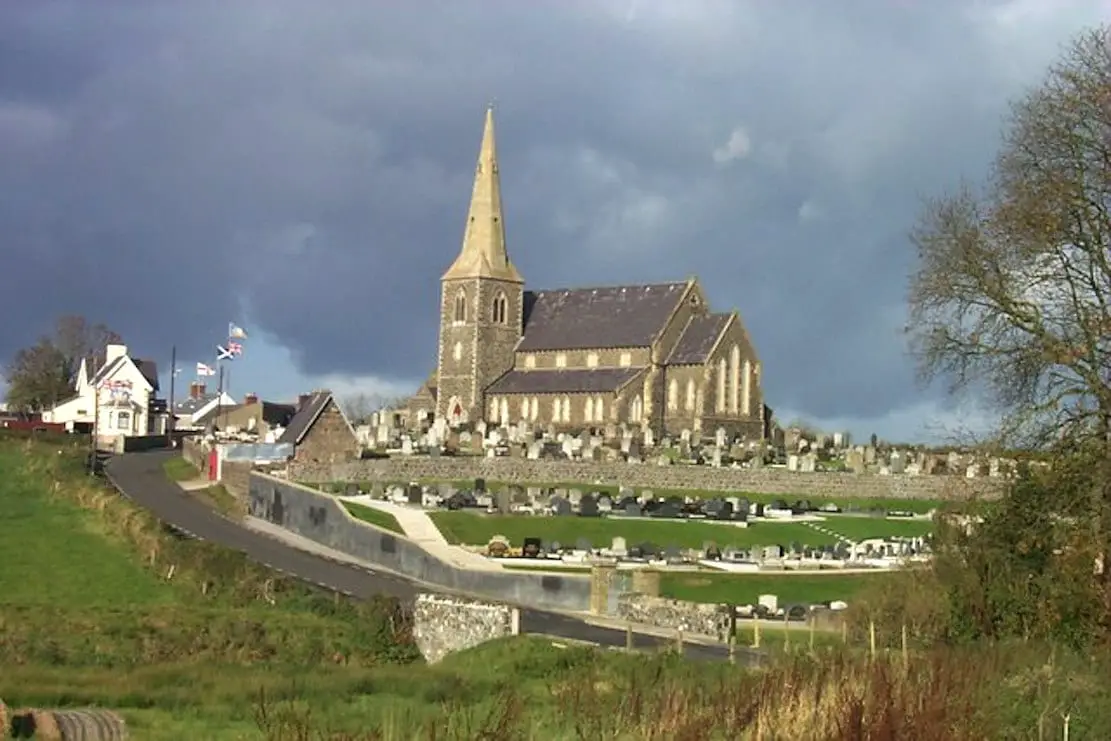
The proposed walk is being styled by organisers as the “Drumcree Civil and Religious Liberty Memorial Walk”. It would see participants leave Drumcree Parish Church and proceed the full length of the Garvaghy Road to the Parkmount area.
The commission is expected to rule on the notification on Friday, after receiving submissions from interested parties including local residents’ representatives.
It comes less than a week after the Parades Commission has again banned Orangemen from marching along the Garvaghy Road as part of this year’s Drumcree church parade – warning that allowing the return route would damage community relations and risk reopening one of Northern Ireland’s most polarising disputes.
In a detailed determination, the Commission confirmed that Portadown District LOL No 1 will not be permitted to take its annual parade down the nationalist stretch of the Garvaghy Road on Sunday, July 5, 2026.
Instead, the outward parade to Drumcree Parish Church must avoid Obins Street and Corcrain/Charles Street at the lower end of town and follow an alternative route via West Street, Northway and Corcrain Road. The return leg is barred entirely from entering the Garvaghy Road and must either retrace the outward route back to the town centre or disperse at Drumcree Church no later than 2.30pm.
The ruling maintains restrictions that have been in place since 1998, when the long‑running Drumcree stand‑off saw some of the worst public disorder and associated violence of the peace process era.
The Commission said it had carried out an “extensive programme of outreach” in early 2026, speaking to Portadown District LOL No 1, residents’ representatives, political parties, church and community groups, police and other statutory bodies before reaching its decision.
Summarising that engagement, the determination describes community relations in Portadown as “greatly improved” in recent years, with significant work done on shared facilities, the removal of some interfaces and better engagement with police.
However, it concludes that any attempt to take the Drumcree parade down its full notified route, including the Garvaghy Road, “would have a negative impact on community relations and would cause significant disruption to the life of the community”.
While the Commission says it has not received specific intelligence pointing to likely disorder or damage to property this year, it states that it “cannot ignore the terrible events of the past that led to fatalities and serious injuries to large numbers of people” linked to the dispute.
The determination, signed on behalf of the Commission on June 26, imposes a series of conditions on the organisers and participants.
For the outward leg, the parade will leave Carleton Street, proceed via Church Street, Market Street and High Street, but at the junction with Castle Street it must turn back along High Street and Market Street, before going into West Street. From there it must travel via Northway to join Corcrain Road, then on to Charles Street, the Dungannon Road/Moy Road roundabout, and up Dungannon Road to Drumcree Church via the Rectory turn.
Crucially, the march is “prohibited from entering that part of the notified route between the junction of High Street and Woodhouse Street and the junction of Obins Street and Charles Street, or any part of that route”.
On the return, the parade is “prohibited from proceeding beyond Drumcree Parish Church, Drumcree Road, and from entering that part of the route which includes any part of the Garvaghy Road, including Parkmount and Victoria Terrace”.
Either the return procession must follow the same alternative route back into town, or participants must disperse at Drumcree by 2.30pm.
The Commission also reiterates standard requirements on stewarding, prompt starting and dispersal, adherence to the code of conduct and police directions, bans on paramilitary-style dress and on alcohol, and a specific reminder of the need for “respectful behaviour in the vicinity of interface areas”.
In its submissions to the Commission, Portadown District LOL No 1 restated its view that being blocked from completing the full return route since 1998 represents “an unjustified infringement of their rights”. The district, which says it has over 850 members, argued that the restrictions amount to a denial of their civil and religious liberties.
The Order acknowledged that it initially refused to engage with the Commission or Garvaghy Road residents in the 1990s, but said it has since sought meetings and written repeatedly to residents’ groups and political representatives, without success.
According to the determination, the District insists it does not even know who represents residents on the Garvaghy Road now, citing demographic changes in the area and questioning whether the Garvaghy Road Residents Coalition still exists. It told the Commission it remains willing to meet residents and believes it is the Commission’s job to find a solution rather than to “encourage mediation”.
The Order also accused the Commission of inconsistency, pointing to a recent Ireland Palestine Solidarity Committee parade in Scarva which, it claimed, had been allowed through where there were objections from residents, and urged a “consistent and fair approach” that would permit completion of the Drumcree route.
Residents’ representatives, meanwhile, reminded the Commission of the history of serious violence, deaths and injuries linked to the Drumcree dispute, and warned that any parade on the Garvaghy Road or Obins Street would have “adverse effects” locally and beyond.
They pointed to the large number of Protestant/unionist/loyalist parades already taking place in Portadown in the first two weeks of July, argued that alternative routes are available, and highlighted the “disruptive and negative impact” of the large‑scale policing operation that would be required if a Garvaghy Road march were permitted.
Local political representatives gave sharply contrasting views in the outreach process.
Some unionist politicians strongly backed allowing the parade to complete its route, one describing the unresolved Drumcree issue as a “running sore for the Unionist community across Northern Ireland”. They stressed that most parades in Portadown pass off peacefully and that community relations have moved on, with improved policing relationships and the removal of some peace walls.
They also argued that the refusal of residents’ representatives to engage should not be the basis for ongoing restrictions, and pressed the Commission to be tougher in insisting that those claiming to speak for residents come to the table.
Nationalist representatives, by contrast, highlighted the trauma caused by Drumcree in the past and said revisiting the dispute now would be like “picking a scab”. They noted that many parades – including ones close to the Garvaghy Road – are tolerated without difficulty, but warned that forcing the issue of a march on that specific stretch would be deeply damaging.
Several political, community and church voices told the Commission that, in their view, there is little appetite among ordinary people, of any background, to see a parade return to the Garvaghy Road, with many influenced by the memory of the harm done in the 1990s.
The PSNI reminded the Commission that both the annual Drumcree parade and the small weekly Sunday protest parades by Portadown District LOL No 1 have been subject to determinations since 1998, and that those determinations have been complied with.
Officers pointed to “significant improvement” in the situation around the parade in recent years, with no notified protests and no disorder, and acknowledged greatly improved community relations in Portadown and better engagement with police.
However, they also characterised the notified route as “sensitive” and accepted that decisions about Drumcree can have consequences “both on the local community and further afield”.
The determination stresses that the sense of grievance felt by Orangemen and the sense of hurt and trauma among residents are both “real” and “not underestimated”.
The Commission says it believes there is “scope to build upon the recent progress in community relations in Portadown to pursue a lasting solution”, but makes clear that, under the law, it can only promote and facilitate mediation – it cannot force either side to engage.
“It is only through genuine dialogue that a situation could be created which would allow for the possibility of the annual Drumcree parade completing its notified route in full,” the report states.
For now, the Commission concludes that keeping the Garvaghy Road out of bounds remains “necessary, proportionate and fair”, balancing the Article 11 rights of marchers to freedom of assembly and expression against the rights of residents and the wider community under human rights law.
It says the conditions imposed are aimed at preventing disorder and protecting the rights and freedoms of others, while still allowing the church parade to proceed to and from Drumcree along an alternative route.