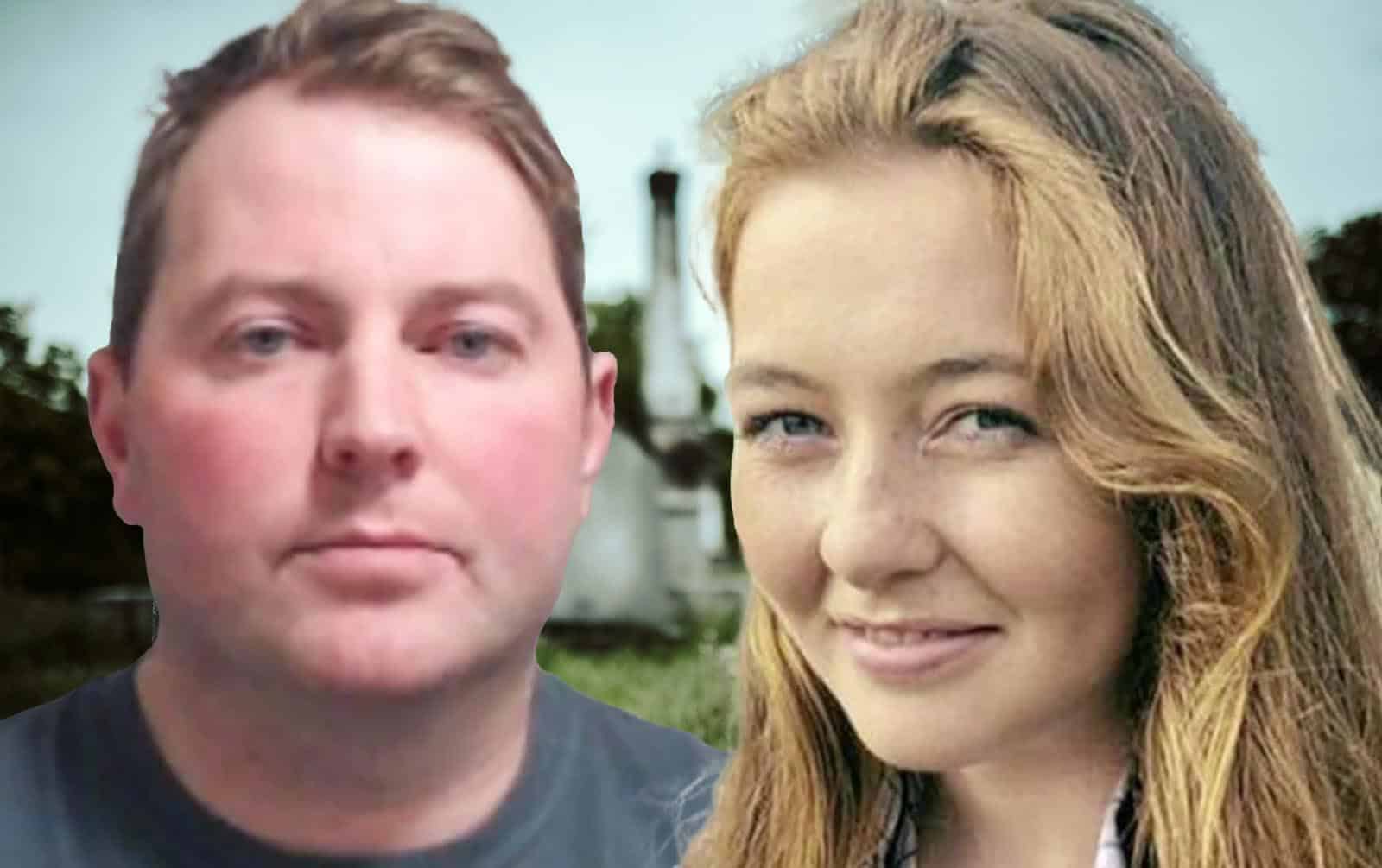
Those of us acquainted with the horrific murder of Katie Simpson knew the Department of Justice-commissioned review was going to be profoundly disturbing and heartbreaking.
Few however, were prepared for the cataclysmic extent of failure across multiple authorities.
Aged just 21, Katie, dressed in her riding gear with her mane of burnished golden hair lying about her shoulders, was lowered into her grave.
It was a scorching hot day in August 2020, and with Covid restrictions still in place, the tiny country church in Tynan held only 30 people, socially distanced. The rest gathered outside, stunned, confused, and distraught.
The coffin was carried by four men to the grave, one of whom had caused that awful day to come about.
Jonathan Creswell was the partner of Katie’s sister Christina with whom he had two children.
A horse trainer much sought after by the equestrian industry, he assumed the role of chief mourner at Katie’s funeral.
Loved and loathed in equal measure, Creswell relished his centre stage display, using his well-honed manipulation skills to present as a devastated brother-in-law, still traumatised at discovering Katie hanging.
It was by all accounts an accomplished performance. He was lauded a hero for ‘rescuing’ Katie, trying to save her life, keeping a bedside vigil in hospital and now carrying her on her final journey.
But it was pure theatrics. Feigned emotion and heaving sobs gave way once he supervised the coffin being placed into the ground.
As people began to disperse, Creswell stood on, staring into the grave, Christina at his side.
This was no painful last goodbye. It was relief.
Those of us watching this drama were holding our breath expecting police to swoop in at any minute. We foolishly thought their absence was to allow a dignified finality to Katie’s pitifully short life.
Nothing.
Still we watched. With the audience now dwindled Creswell lifted his head, caught sight of Katie’s longest and dearest friend, and broke into a diabolical smile.
It was a grotesque exhibition of the entrenched arrogance permitted to develop unfettered over years.
It was over. We had clung to that hope we are told of good overcoming evil, yet an angel had been killed by a devil.
Empowered, he thought he’d pulled it off. He’d played fast-and-loose most of his life, in the main escaping unscathed. Why should Katie’s murder be any different?
This was after all the great Creswell – illusionist, manipulator, gaslighter, groomer. Murderer.
The rest is well known. Police weren’t coming. Case closed. Suicide.
Except it wasn’t.
Katie was murdered and we knew it. Getting police to listen was almost as brutal as the fact she was dead, but she was worth every tear and more.
The Review Report isn’t just damning. It’s catastrophic on an epic scale and severely damaging to authorities, chiefly PSNI.
When Minister for Justice Naomi Long spoke on the Review the NI Assembly one member enquired what action would begin immediately to address the abysmal PSNI failures.
She explained Chief Constable Jon Boucher had assured her all sudden deaths are now treated as suspicious until proven otherwise.
Great – except that particular procedure was adopted by PSNI in 2010, ten years before Katie’s murder.
A few months ago I asked PSNI for a copy of their current Death Investigation Manual.
It’s a good resource and has had a number of amendments over the years.
Nestled in the pages was a section called ‘Investigative Mindset ABC’ – Assume Nothing, Believe No-one, Challenge Everything – the complete opposite of Katie’s case.
Despite being what most would consider common sense it was only added to the manual in 2025. That’s five years after Katie’s terrible death which only became a murder investigation through gritted teeth because resistance was immense. It seems the murder of a beautiful 21-year-old was incomparable to the egos at stake for making the wrong call.
Katie was simply collateral damage.
Eventually an investigation was launched and Creswell was arrested and charged.
Following much wrangling around who could and couldn’t complain, the Police Ombudsman also launched an investigation.
Radio silence followed for three years until the murder trial collapsed after one day without a single witness giving evidence. Creswell, overwhelmed by the trial opening, took his own life in a final bitter act of control, smuggling the secrets he thought he buried with Katie into his own grave.
During a Policing Board meeting in the aftermath the Chief Constable said while misconduct was found, he quickly stressed it was “not gross or criminal.”
Existing rumours of cover-up gathered momentum.
Several months later the Ombudsman described the PSNI investigation as ‘flawed’, neatly becoming the gloss on an existing white-wash.
The Review has now destroyed those rather flimsy descriptions and exposed a toxic misogynistic culture within PSNI ranks.
It’s true some women in this tragedy were treated very poorly: Katie by the mishandling of her murder, the first whilsteblowers who were rudely dismissed and a number of nurses at the hospital.
I didn’t fare well either and came with the added audacity of daring to be a journalist. The fact I knew Katie and previously covered Creswell’s violence in court was apparently of no relevance.
The Ombudsman has been alerted to this twice and has so far failed to investigate or provide an explanation why they haven’t, to the extent it seems a third complaint will have to be submitted, doubtless to be ignored again.
But setting gender aside, in what society was the death of a 21-year-old not a cause for concern?
Smouldering among the anger and upset of the Review is a troubling, yet unaddressed issue.
Was Katie the only victim to receive such shabby treatment and was Creswell the only offender who slid through the system with regular malevolent ease?
If so, why? What made this case different?
If not, how many more?
One of the key issues was Creswell’s previous record only showing his motoring convictions.
The PSNI have never explained what occurred, only that the system has changed to ensure it cannot happen again.
That sparked the inquiry. If this occurred in Creswell’s case, it must surely have happened in others.
The PSNI were asked if a deep dive had been carried out to establish if other records were likewise affected, after all this is high risk territory and could be the difference between another victim’s life and death.
Not widely known for their transparency or positive engagement with Press, an unusually frank response indicated no such investigation had been conducted as PSNI didn’t know how they could go about it.
As the sixth anniversary of Katie’s death approaches, with all the echoes of that haunting graveside tableau, there has at least been acceptance of the vast failures she endured in her short life and untimely death.
Ensuring those failures aren’t repeated is another matter, filed in the ‘lessons learned’ drawer.
The same lessons have been on the curriculum for years, alongside the same assurances of learning. It’s a worn-out, unconvincing script.
Given so many failings and unprecedented aspects, this case is arguably the worst in PSNI history.
Whether it becomes the catalyst for change has yet to be determined.