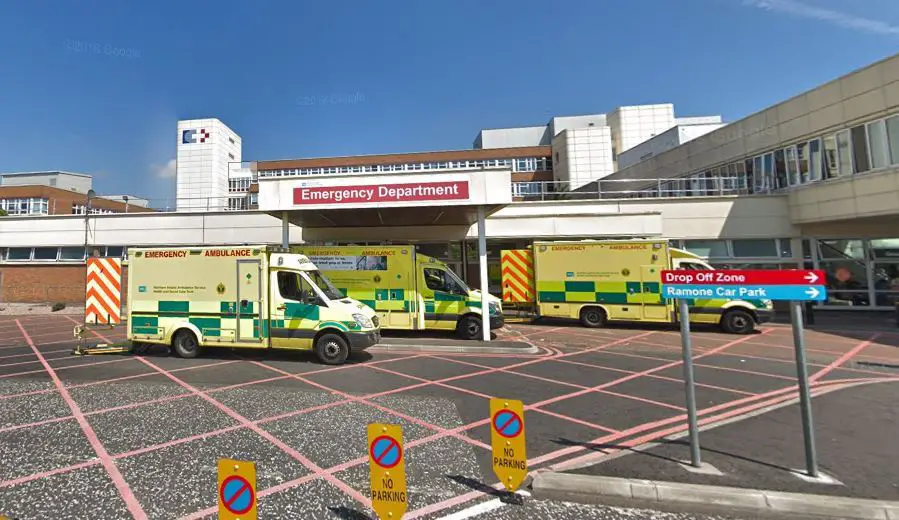
Complaints about Health and Social Care services are rising across Northern Ireland – and the Southern Trust area is very much part of that story.
New figures from the Department of Health’s latest “Complaints and Compliments” report show that, between April and December 2025, Health and Social Care Trusts received 5,222 complaints relating to 9,281 separate issues.
That’s a sharp increase on the same nine‑month period the year before, when 4,014 complaints and 6,519 issues were recorded. Over the past five years, complaint issues have climbed from 5,005 in 2020/21 to 8,805 in 2024/25 – before jumping again to 9,281 in just three quarters of 2025/26.
Every Trust is feeling the pressure. Belfast accounts for around a third of all complaints – 1,684 cases – but the Southern Trust still makes up a significant share of the total. Of the 5,222 complaints received across the system during April to December 2025, 647 were about services in the Southern area, roughly one in eight.
The South Eastern Trust recorded 1,088 complaints, the Northern 896, the Western 707, while the Northern Ireland Ambulance Service received 200.
Behind each complaint there can be several different problems. The report distinguishes between a complaint – an expression of dissatisfaction from or on behalf of a patient, client or service user – and the individual complaint issues it contains. A single letter or email might, for example, raise concerns about how long someone waited, how staff spoke to them and how clearly things were explained. All three would be logged separately against different categories. That is why 5,222 complaints generated 9,281 distinct issues in just nine months.
Across Northern Ireland, the most common problem areas were quality, institutional issues and communication. Quality concerns – essentially how good, safe or appropriate the care felt – accounted for 2,246 issues, almost a quarter of the total.
Institutional issues, covering systems, processes and things like waiting times, made up 1,912 issues (21 per cent). Communication and information problems were close behind on 1,826 issues (20 per cent). Taken together, almost two‑thirds of all issues related to how care was delivered, how services were organised and how well everything was explained to patients and families.
Hospitals generate the bulk of complaints. Each issue is assigned to a “Programme of Care”, essentially the type of service involved. More than half of all issues recorded between April and December 2025 – 5,283, or 57 per cent – related to the “Acute” Programme of Care, which covers hospital‑based treatment. With major acute sites such as Craigavon Area Hospital and Daisy Hill in the Southern area, a large share of the local complaints will be linked to hospital services. The figures underline the pressure those services continue to face.
The report also offers a glimpse of who complaints are about. In 99.7 per cent of complaints, the gender of the patient or client was recorded. Of those, 60 per cent related to female patients and 40 per cent to males.
The median age of the person at the centre of the complaint was 46. Again, those figures are for Northern Ireland as a whole rather than the Southern Trust alone, but they give a sense of the typical profile.
How quickly complaints are dealt with remains a sore point. Under the regional HSC Complaints Policy, Trusts are supposed to provide a full, “substantive” response within 20 working days of receiving a complaint. Where that is not possible, they must send a holding response explaining the delay – and the report stresses that all holding responses are being issued within that 20‑day window.
However, when it comes to full replies, performance is much weaker. During April to December 2025, only 45 per cent of substantive responses across Northern Ireland were sent within 20 working days. In other words, more than half of complainants waited longer than the target timescale to receive a complete answer.
Not every scrap of feedback is negative. The same publication also tracks the number of compliments received by Trusts. In 2025/26, thousands of patients, service users and families took the time to praise staff or services. Cards were the most common way of saying “thank you”, making up almost two‑fifths of compliments, followed by online feedback via Care Opinion and Trust feedback forms. A substantial volume of positive feedback sits alongside the growing number of complaints – a reminder that many people still report very good experiences even as pressure on the system mounts.
The report does not attempt to spell out exactly why complaints have risen so sharply, but the context is clear: long waiting lists, stretched wards, staff shortages and a public that is increasingly willing to speak up when something goes wrong. What the numbers do show clearly is that the Southern Trust area is not immune to the trends seen across Northern Ireland. While Belfast accounts for the largest share of complaints, the Southern Trust’s 647 cases in just nine months underline that many local people are unhappy enough with their care or experience to put their concerns in writing.