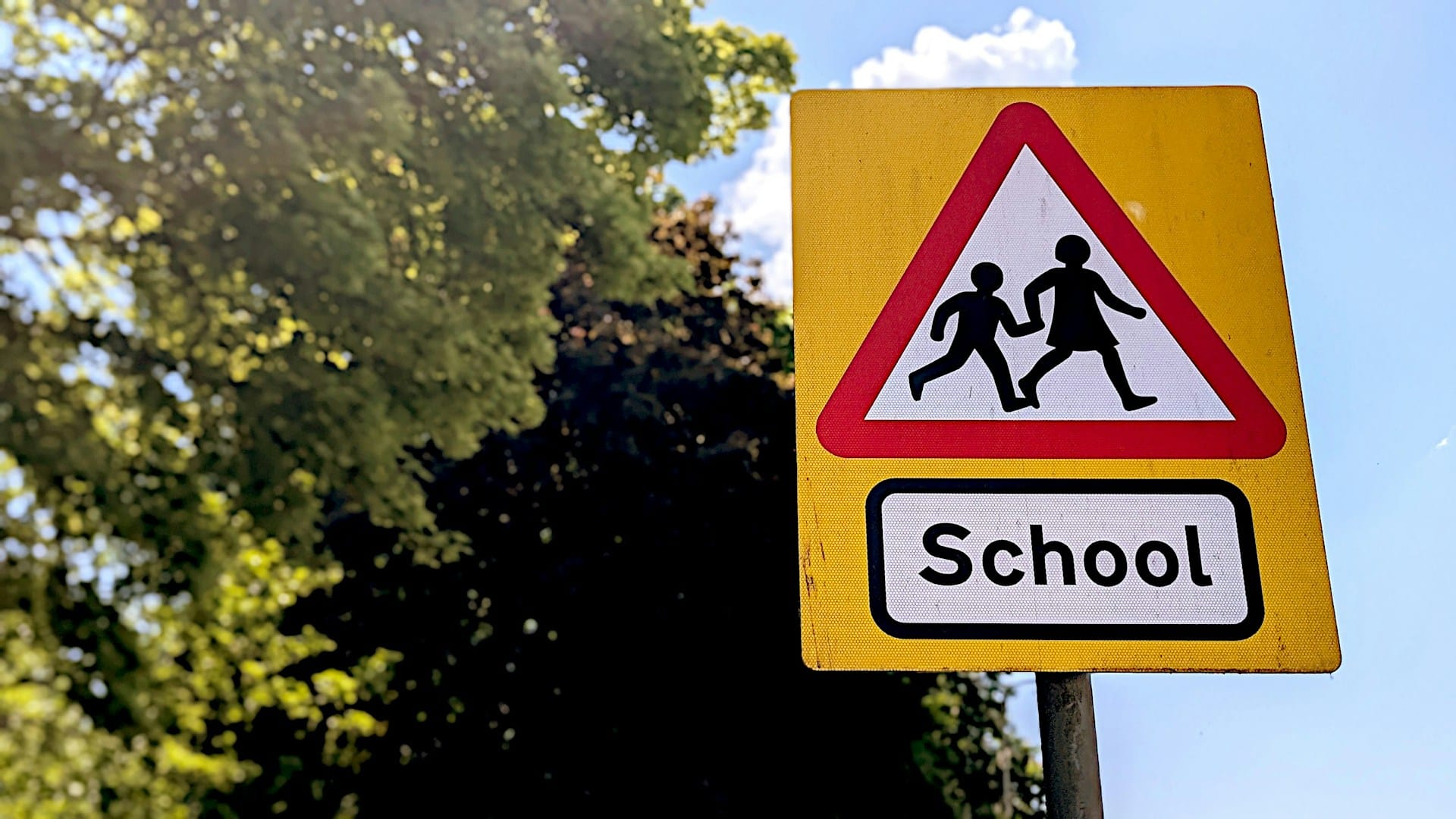
A raft of schools are expected to be recommended for closure under plans to bridge a funding crisis within education in Northern Ireland.
All schools will be assessed and judged on whether or not they are sustainable under a programme of measures which could see unprecedented cuts across the entire educational sector.
Special education needs, school transport policy and meals provision are also to be looked at as part of a five-year review.
Education Minister Paul Givan has warned that difficult decisions will have to be made.
He said today (Wednesday): “We cannot close a billion pound gap, or even meaningfully reduce it, through making marginal efficiencies. Nor can we contemplate large‑scale redundancies.
“Northern Ireland’s education system is now at a critical turning point. The proposed reform programme offers a credible and necessary roadmap to stabilise budgets, protect learning and build a sustainable, high‑quality system for the long term.”
A five-year budget strategy has now opened for an eight-week long period of public consultation.
The Department of Education’s 2025-2026 budget is £3.36 billion which, the Minister says, is more than £250 million short of what is needed.
Based on projected budget allocations, the gap between funding available and spending forecasts “widens dramatically to over £0.8 billion by 2026-27 and over £1.15 billion by 2028-29”.
The proposals will focus on five key areas.
Perhaps most worrying for families – particularly in rural communities – is a proposal for the “restructuring of the schools’ estate”. This will have the objective to “protect the quality of education through reduction in the number of schools”.
The consultation document states: “In the current financial situation, it is no longer feasible to maintain the present number of schools. Local communities rightly value their schools and many smaller schools demonstrate strong outcomes in several areas of the Sustainable Schools Policy.
“However, sustaining a large number of small schools comes at a high cost.
“Maintaining schools with low enrolments requires additional teaching, administrative and support staff, as well as ongoing investment in buildings and grounds. It also means paying small school subsidies and higher per-pupil funding. In 2024–25 alone, £26million was allocated through the Small Schools’ Support Factor, with a further £7million provided for primary principal release time. There are also costs to maintain the school buildings. Collectively, these costs are substantial and reduce the resources available to support pupils across the wider system.”
Since 2010/11, Northern Ireland has witnessed the closure of 105 schools. The current schools estate stands at 958.
But according to the consultation document, the number of schools remaining below the ‘sustainable’ policy is still “high”.
In 2024-25, 215 primary schools had enrolments deemed not sustainable, along with 41 post-primary and 35 sixth forms.
And if further declining enrolments materialise, that could rise to 306 primary schools, 56 post-primary schools and 40 sixth forms by 2033/34.
The Independent Review of Education has concluded that a “new approach to the area planning process was necessary to create a school network that meets the needs of all learners and promotes social cohesion, while also providing a comprehensive curriculum in a cost-effective manner”.
The panel suggested that as a short-term measure a single, independent, fixed-term planning commission with a remit of carrying out a complete review of the network of schools was needed. This would prepare a plan for a “revised network of schools with more efficient and sustainable admissions and enrolment numbers, capable of offering a complete curriculum experience to all learners”.
It calculated that the outcomes of such an approach would generate maximum annual savings of approximately £100m.
The consultation states: “The Department recognises that the current pace of change has been too slow and that decisive action is now required. Over the coming months, we will move forward to appoint an Independent Commission to lead this work with urgency and transparency.
“The Commission will have a clear mandate to carry out a comprehensive viability audit of all schools to assess sustainability against agreed criteria; make evidence-based recommendations for restructuring the school estate, ensuring resources are focused where they deliver the greatest benefit for pupils; and produce a detailed five-year implementation plan to guide change in a phased, manageable way.”
In terms of special educational needs, the consultation outlines a plan to “develop a sustainable, inclusive, needs-led support model that improves education outcomes for pupils with SEN”. This will involve “transition from the current classroom support model for children with SEN Statements in mainstream schools, based predominantly on one-to-one assistance”, along with the “implementation of alternative models of SEN support that prioritise whole school strategies and small group teaching”. The plan is to “provide schools with flexible SEN budgets” and “enhance staff training and professional development”.
The consultation will also closely scrutinise home to school transport, which is described as “more generous” in Northern Ireland than other parts of the UK.
This could see “charges introduced for some pupils” with “exemptions for vulnerable groups”. There would be a move to “align SEN transport with reforms to SEN support model”. Proposals would see a reduction in the the use of taxis, “ensuring affordability and value for money”.
The consultation aims to ensure that “transport assistance for pupils who require additional support is based on evidenced need, fairness and consistency of approach”.
Centralisation of school meals production in some areas and an increase in costs of meals, working on a cashless system, could also be on the table to save money.
The aim is to “reduce the net expenditure on school meals provision by increasing income from school meals and
consolidating the number of smaller kitchens”.
There would also be a reformat of the model of financial delegation for schools to “strengthen financial governance and accountability” and “to restore stability”.
This would see “tighter financial oversight and traffic-light intervention system”; the consultation proposes implementing a “centralised staffing model for schools in significant deficit”. It would “enable early severance and redeployment schemes”, while at the same time rewarding “sound financial management with greater autonomy”.
The consultation concludes: “Managing the implementation of reform will require careful sequencing and thorough engagement with stakeholders. These reforms are complex and far-reaching, and their success depends on transparent planning and effective communication. We will prioritise stability for pupils and staff during transition, while driving the changes necessary to secure financial sustainability and educational improvement.
“These are ambitious and far-reaching proposals. In due course they will require Executive support in terms of expenditure, legislation and certain significant or controversial decisions.
“Pursuing options that have no realistic prospect of political support would result in unnecessary expenditure and divert valuable resources away from initiatives that can deliver genuine savings.
“Redundancy costs are an unavoidable consequence of structural reform, particularly where school closures occur or staffing levels need to be adjusted over time.
“The approach will be to minimise compulsory redundancies wherever possible, relying instead on redeployment, retirements and voluntary redundancy. The ability to offer voluntary redundancy will be absolutely necessary and this programme will require dedicated Executive funding to manage such costs.
“These proposals mark the beginning of a transformation that is essential for financial stability given the proposed future budget allocations for education.
“They will not be easy, but they are necessary to protect classrooms, maintain high-quality teaching and learning, and create a system that is both sustainable and focused on delivering the best outcomes for every child.”
The public consultation and five-year budget strategy can be accessed on the DE website www.education-ni.gov.uk/consultations/consultation-five-year-education-budget-strategy. The consultation remains open until April 3.