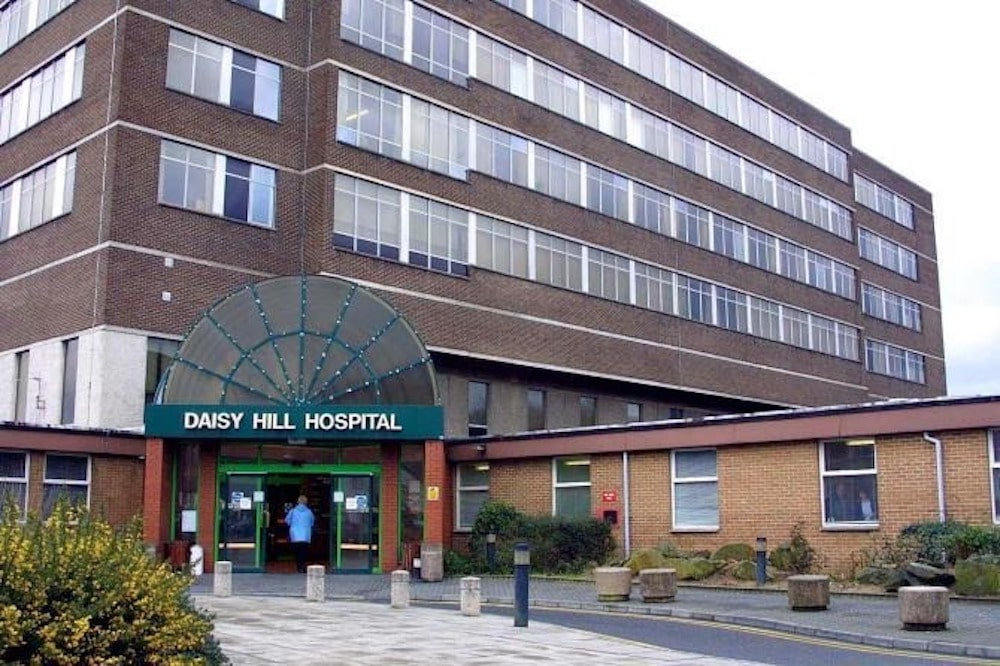
An anxious mum-to-be has warned that shifting maternity services from Daisy Hill to Craigavon could mean the difference between expectant mothers giving birth in hospital or at the side of a road.
The local woman, who asked not to be named, was speaking ahead of a public meeting to demand the Southern Trust rethink its ‘contingency’ plan which could see maternity services relocated due to ‘significant’ workforce pressures.
That meeting is due to take place at the Canal Court Hotel this Thursday, October 1, at 7pm.
Meanwhile, the National Childbirth Trust has weighed in to the debate and written to the Southern Trust to express its own concerns if such a plan is implemented.
Both the NCT – and the latest expectant mum to speak out on the matter – have warned that accessibility to hospital maternity services is key and should be to the forefront of all decision-making.
The mum-to-be, who lives in the Newry and Mourne area, is currently pregnant with her second baby and is “deeply concerned” about the loss of maternity services at Daisy Hill in Newry and “what this could mean for women and babies in our area”.
She told Armagh I: “I understand that there are difficult decisions being made around healthcare services and that there are pressures on staffing and resources.
“However, when it comes to maternity care, I believe the reality for women living in this area needs to be properly considered.
“Craigavon Area Hospital is at least around 50 minutes away from where many women in the Newry, Mourne and surrounding areas live. That is 50 minutes in ideal conditions. It doesn’t take into account school-run traffic, rush-hour traffic, roadworks, accidents, bad weather, local events or parades. It certainly doesn’t take into account what happens if labour progresses much faster than expected.
“That is what worries me most.
“When I had my first baby, there was a period where it felt like nothing much was happening. Then, very suddenly, everything changed. Within what I would estimate was only 20 to 30 minutes, my baby was born.
“If the same thing happened during this pregnancy, I genuinely do not believe I would have time to get to Craigavon.
“This isn’t about being unwilling to travel. It isn’t about wanting convenience. It is about the fact that childbirth does not always follow a schedule.
“What happens if my waters break and labour progresses extremely quickly? What happens if my partner is driving me to Craigavon and my baby suddenly starts coming in the car? What are we supposed to do then?
“It isn’t simply a case of turning around and going to the nearest hospital. The nearest hospital would no longer have the maternity service available to safely manage that birth.
Both the mother and baby could potentially be put in an incredibly frightening and vulnerable situation.
“I also appreciate that planned Caesarean sections are a personal choice. Many women choose to have planned C-sections, and that is entirely their decision. Personally, I would only want a C-section if there were a medical reason for one and it was advised as the safest option for me and my baby.
“However, a planned procedure is fundamentally different from spontaneous labour. If someone has a planned Caesarean, they know the date and time. They can make arrangements and leave with plenty of time to reach the hospital. A woman whose waters have broken or whose labour has suddenly progressed does not have that luxury.
“If services are genuinely under such severe pressure that difficult choices have to be made, surely the needs of women experiencing unpredictable and rapidly progressing labour must be given particular consideration.
“Maternity care is not just another hospital appointment. You cannot simply tell a woman who is about to give birth that she needs to travel another 50 minutes and expect that every birth will wait until she gets there.
“The Southern Health and Social Care Trust itself currently describes maternity services as providing care across both Daisy Hill and Craigavon, supporting thousands of expectant mothers and delivering thousands of babies each year. Daisy Hill’s maternity ward has also provided a dedicated maternity service for women and their newborn babies.
“I am not arguing that Craigavon does not provide excellent maternity care. I am arguing that distance matters when you are in labour.
“I want to know what the contingency plan is for women like me who live a significant distance from Craigavon and have a history of a very fast delivery.
“What happens when there isn’t 50 minutes? What happens when there isn’t even 20 minutes? What happens when the baby is coming and you are still on the road?
“These aren’t hypothetical fears to me. I have already experienced how quickly labour can change and I am now pregnant again.
“No mother should have to sit in the back of a car wondering whether she and her baby will make it to hospital in time.
“Daisy Hill Hospital is part of the community. For generations, women in Newry, Mourne and surrounding areas have relied on it to bring their babies safely into the world. I believe the voices of those women need to be heard before decisions are made that could fundamentally change maternity care in this area.
“This is not about asking for special treatment. It is about asking decision-makers to recognise that birth cannot always be planned, scheduled or predicted. For some women, 50 minutes might be perfectly manageable. For others, 50 minutes could be the difference between reaching a maternity unit and giving birth on the side of the road.
“There is also something about this situation that I find extremely difficult to understand. Daisy Hill Hospital provides abortion services, yet women who want to continue their pregnancy and give birth are now being expected to travel to Craigavon. I fully understand that abortion is legal and that women have different circumstances and choices, and I am not trying to judge anyone who accesses that service.
“But as a pregnant woman, I find it incredibly difficult to understand how Daisy Hill can provide a service to end a pregnancy, while a woman who desperately wants to continue her pregnancy and safely deliver her baby may be told that she has to travel almost an hour away to do so.
“Why can a woman experiencing a pregnancy-related procedure access care at Daisy Hill, but a woman whose baby is ready to be born potentially cannot? That contrast deserves to be questioned.”
Angela McConville, chief executive of the National Childbirth Trust, has written to the Southern Trust to highlight similar concerns around mothers being able to access maternity in a timely manner.
She said: “We are deeply concerned about the impact that any suspension of local birth services could have on women, birthing people, babies and families across Newry, South Armagh, south Down and surrounding rural communities.
“Over the last year, around 1,700 babies were born at Daisy Hill Hospital, underlining the importance of the service to the local population. If births are transferred to Craigavon, many women will face significantly longer journeys for labour and birth, at a time when reassurance, continuity of care and prompt access to support matter most. Local women have already spoken publicly about increased travel times, anxiety and the prospect of having to change carefully made birth plans.
“For many, where a baby is born is far more than a logistical consideration. Access to timely, local and high-quality maternity care affects experiences of pregnancy, labour, birth and the early days of parenthood. It is therefore vital that any decisions are informed by the lived experiences and needs of the communities affected.
“We recognise the significant workforce challenges facing maternity services at Daisy Hill, including difficulties recruiting consultant obstetricians, and we acknowledge the responsibility of healthcare leaders to ensure services remain safe for women and babies. These pressures are not unique to Daisy Hill, and reflect workforce issues that we are seeing for maternity services across Northern Ireland and the wider UK.”
Ms McConville also highlighted the fact that Northern Ireland now had the highest infant mortality rate in the UK, increasing from 4.2 deaths per 1,000 live births in 2018 to 4.5 per 1,000 in 2024. She also spoke of widening health inequalities, noting that infant mortality rates are highest in the most deprived communities.
“While infant mortality is influenced by a wide range of factors, these findings reinforce the importance of ensuring that maternity and neonatal services remain as accessible, and equitable as possible, whilst centring women and parents,” added Ms McConville.
“At a time when Northern Ireland has been warned about worsening infant mortality and widening health inequalities, decisions affecting access to maternity care should be subject to the highest level of transparency and scrutiny, and parent voices must be heard.
“The impact is likely to be felt most strongly by those who already face barriers to accessing healthcare, including people living in rural communities, families on lower incomes, younger parents, disabled parents, those without reliable access to transport and those requiring regular antenatal or postnatal support.
“Access to local maternity services is closely linked to choice, rights-respecting care and informed decision making. If births are moved elsewhere, some women may no longer be able to give birth in their planed setting or access the care options that had expected. Having genuine choice about where to give birth is a fundamental part of personalised maternity care, and any reduction in choice should be carefully considered alongside the impact of safety, rights, experiences and access.
“NCT believes it is essential that the voices of women, birthing people, parents and local communities are at the heart of any decision-making process. We are therefore seeking reassurance about how the impact on families is being assessed and mitigated, both during any temporary suspension and in plans for the longer-term future of maternity care in the area.
“Given the significant impact this proposal could have, we believe the Trust should provide greater transparency on what alternatives have been explored to avoid or minimise disruption to local maternity services; how the impact on women, babies and parents has been assessed, particularly for those in rural and deprived communities; whether an Equality Impact Assessment has been undertaken and whether its findings will be made public; what support will be available to women and parents facing additional travel, childcare, financial or practical challenges as a result of service changes; what arrangements are being made to maintain continuity of care and preserve choice wherever possible; what specific workforce, operational or other criteria would allow inpatient maternity services to continue at Daisy Hill, or be reinstated if temporarily suspended; and how women, parents, staff and communities have been engaged to date and how they will continue to be involved in discussions about the future of services.
“Women and parents must have confidence that any changes to maternity services are being made transparently, that all alternatives have been properly considered, and that the impact has been fully assessed. NCT stands ready to work constructively with the Trust, the Department of Health, the Public Health Agency and other partners to ensure parents’ voices are heard and are reflected in decisions about the future of maternity services in the region.”
The public meeting in the Canal Court Hotel, meanwhile, is being organised by the SoS Daisy Hill Hospital campaign group, which is inviting everyone to come along and show their support to ongoing efforts to protect local services.
Most read today



PUBLIC NOTICE