A major £110 million regeneration of the historic Bessbrook Mill has cleared its final hurdle after Newry, Mourne and Down District Council’s planning committee today (Wednesday, November 4) voted to approve the scheme.
The long‑awaited decision paves the way for the derelict former mill and army base – a landmark at the heart of the model village – to be brought back into use with hundreds of new homes, businesses and new public open space.
The project, previously costing in the region of £60m, has now – as of today – risen to £110m.
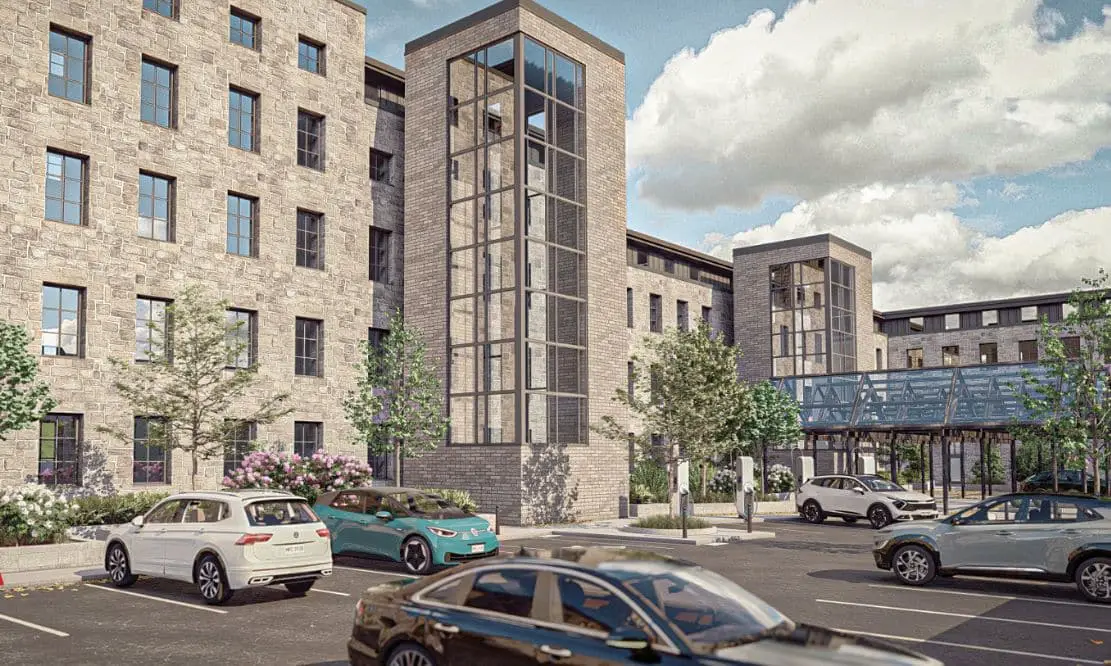
Under plans brought forward by Keady‑based Farlstone Developments, the listed mill building will be restored and converted to provide 165 apartments, with an additional storey, six office units and a gym. Across the wider site, there will be 267 homes in total, made up of the 165 apartments within the mill itself, 48 new‑build houses and a further 54 apartments. Of these, 56 units will be social housing, which planners say will make a meaningful contribution to an identified need in the Bessbrook/Derramore area.
Key historic features are to be retained, including the blast wall and the Derrymore Road boundary wall, with the historic gateway reinstated. Sections of the Weavers’ Shed will be carefully dismantled and re‑erected, accompanied by interpretation boards to help tell the story of the site. Around 0.84 hectares of new public open space will be created for residents and the wider community, with new pedestrian and cycle links tying the site into Derrymore Road, Fountain Street and the village.
Architect Eamon Larkin of Milligan Reside Larkin, speaking on behalf of the applicant, described it as a vital step in saving “one of the most significant industrial heritage assets in the area” after years of decline.
They told councillors the proposal represents a heritage‑led regeneration fully in line with the site’s mixed‑use zoning in the Banbridge, Newry and Mourne Area Plan, combining residential, employment and leisure uses. They also pointed out that the current scheme is smaller and, in their view, more sensitive than a 2012 approval for 272 units on the site, with greater retention of historic fabric.
Planning officers – supported by statutory consultees – concluded that the project complies with key heritage policies with the new‑build elements providing the financial means to secure the mill’s restoration and long‑term future. Around 21 per cent of the homes will be social housing, backed by the Housing Executive and Ark Housing Association, against an identified local need for 123 dwellings.
NI Water’s £26m investment programme in the Newry catchment was cited as creating a pathway to a permanent foul‑drainage connection. A temporary treatment plant will act as an interim measure only and planning conditions tightly cap occupation until a permanent connection is in place.
Today’s approval follows one of the most heavily contested planning processes in the district in recent years.
UUP councillor David Taylor, who was granted speaking rights, lodged a detailed objection, arguing that the scheme amounted to “over‑intensification” out of keeping with the village’s scale and historic setting. He cited Strategic Planning Policy Statement principles that development should respect local character, and warned that Bessbrook already faces “ongoing issues” with roads, water and drainage infrastructure. A development of this size, he said, risked placing “further strain” on under‑invested services and impacting residents’ quality of life.
Cllr Taylor further contended that a heavy focus on housing risked missing an opportunity for a more balanced regeneration that could put greater emphasis on tourism, jobs and community uses linked to the mill’s industrial heritage.
Local resident John Davis, who also addressed the committee, highlighted the strength of community opposition, including a 110‑page petition and more than 1,000 written objections. He argued that the wider area is already “saturated with huge housing developments” and questioned how schools, sewers and roads could absorb additional growth.
Mr Davis and other objectors stressed Bessbrook’s unique Quaker and linen‑mill history, drawing comparisons with places such as Mossley Mill in Antrim and sites in Lisburn where historic industrial complexes have been repurposed for museums, civic uses and visitor attractions. He suggested the mill complex could anchor a heritage‑led tourism offer incorporating a museum, café, shops and visitor accommodation, helping bring people into the village and open up south Armagh rather than becoming “just more houses”.

Aerial view of Bessbrook Mill as it stands today
Councillors heard, however, that many of these concerns had already prompted significant changes to the proposal over the last three years. The original 2023 application proposed 272 homes – 214 apartments and 58 houses – alongside two retail units, three office units and a gym. After strong feedback from planners and the community, this was first reduced to 264 units and then further refined. Earlier this year the plans were amended again to the current 267‑unit mix, with fewer houses than originally envisaged and more space given over to open space and heritage elements.
In a 2025 letter, the council’s own Planning Department had criticised an earlier iteration as “significantly over developed”, raising concerns about scale, massing, parking, the extent of hard surfacing and the lack of amenity space, and stating that the layout appeared “disconnected” from the village rather than enhancing it.
Today’s recommendation by the committee – where seven of the eight members approved, with one abstention– and decision reflect officers’ view that the latest revisions now address those “fundamental issues” and that, on balance, the benefits of securing a long‑term viable use for the mill outweigh remaining concerns.
Eamon Larkin told the committee that without planning approval and investment, the mill’s decline would simply continue. He said the approved scheme “secures its restoration and viable reuse, delivering new homes including social housing, local employment space and new public open space” in line with the zoning and the site’s planning history.
With full planning permission, listed building consent and conservation area consent now granted, attention will turn to phasing, detailed conditions and delivery of what is expected to be a multi‑year construction programme. Conditions will tie the delivery of new‑build housing to the restoration of the mill itself through a binding contract and phasing plan, intended to ensure the historic core is not left behind.
Today’s decision marks a major milestone for one of south Armagh’s most important historic sites – and the beginning of a new chapter for the village that grew up around it.