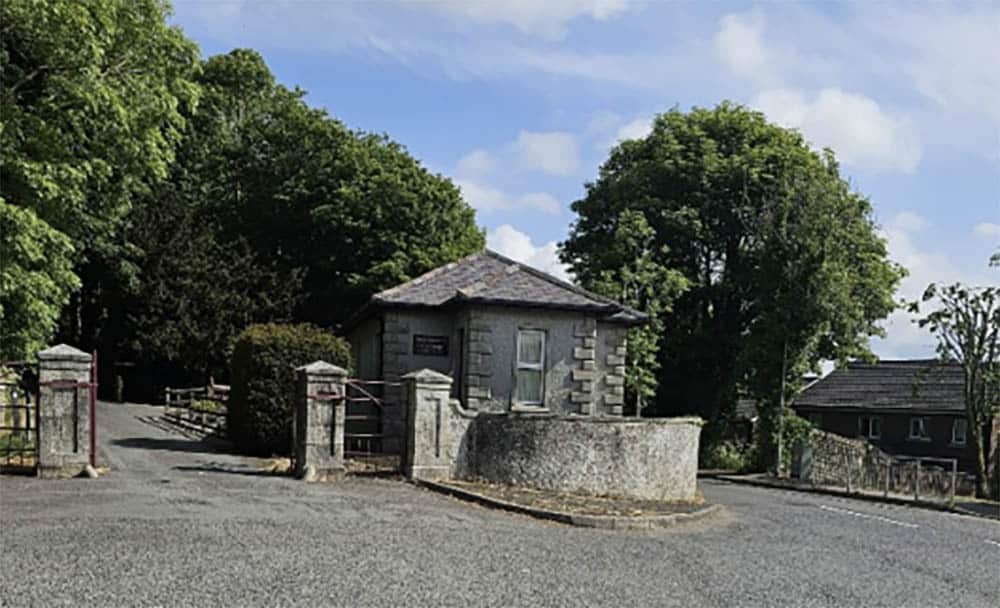
Plans to open a new physio clinic at an historic gate lodge in County Down have been given the go-ahead.
The proposals, in the name of Niamh McGowan, were submitted to Armagh City, Banbridge and Craigavon Borough Council last summer.
Now planning officials have exercised their powers to give the proposals for a “physic clinic and amenities” a clean bill of health.
The plans – for a change of use – relate to the Whyte’s demesne in Loughbrickland.
Drawings show a single-storey facility, the majority of which is given over to a physiotherapy treatment room, accessed through a front hall.
There would also be a rear hall, boiler room, kitchen and disabled toilet provision.
There would be no change to the six parking spaces currently available on site.
The property is currently used as a ‘meeting room’ and officials were content that the change of use was suitable.
There were no objections to the proposals and all of the statutory bodies consulted were also happy with the application.
Officials, in their report, found that the “reuse or conversion would not unduly affect the amenities of nearby residents or adversely affect the continued agricultural use of adjoining land or buildings”.
“The proposal is not situated adjacent to agricultural land or buildings, and will not impact on access to Loughbrickland House,” they added.
Neighbouring properties would “not be affected by the change of use of this building as the building is located on the opposite side of Old Newry Road and bounded a wall”.
The nature of the change of use – as a physio clinic – was also “acceptable at this location”.
The report states: “As this is an existing building there will be no negative impact on the character of the area and, as no further development is proposed, only the change of use of the building to a physiotherapy clinic which will not erode the character of the area. There are no issues relating to integration as the building is in situ and it is only the change of use of the building that is being assessed.”
And the report adds: “In this instance no works are proposed that would lead to the loss or cause harm to the character or setting of the historic park and garden.”
Shooter Property Services had previously been tasked with securing a tenant.
The agent, in its marketing materials, had described the Gate Lodge as being sited in a “high profile location at the entrance to Whyte’s Estate, an historic demesne, very popular with walkers”.
The agent added: “The gate lodge was relatively recently built and is in excellent order comprising an open plan main hall plus kitchen and W.C.
“The property would be suitable for a variety of uses subject to approvals. With high volumes of walkers using the demesne on a daily basis and considerable passing traffic an early viewing is recommended.”
Meanwhile, Tumilty Design – in a design and access statement – detailed their client’s intentions when the application was submitted last July.
“No changes will affect the exterior of the appearance of the roadside building,” they state. “All changes will be to the internal with no permanent changes to the interior just different equipment and use of the building.
“The access is to stay as existing with our client also having use of the rear car park for patients – again no changes to the access or the parking facilities.
“The access is adequate and fulfils DfI standards and the change of use.
“There is a disabled access to the rear door which again is adequate and will be used for the change of use purposes.”
The gate lodge sits close to an existing Victorian House which is a Grade B2 listed building. It was built as a medical officer’s residence and dispensary in 1914 to designs by William Wright Larmor.
The applicant will now be informed in writing of the council’s decision paving the way to proceed.