The historic family home of a famous Northern Ireland-born explorer could be converted into a new 12-bedroom guesthouse with dining facilities.
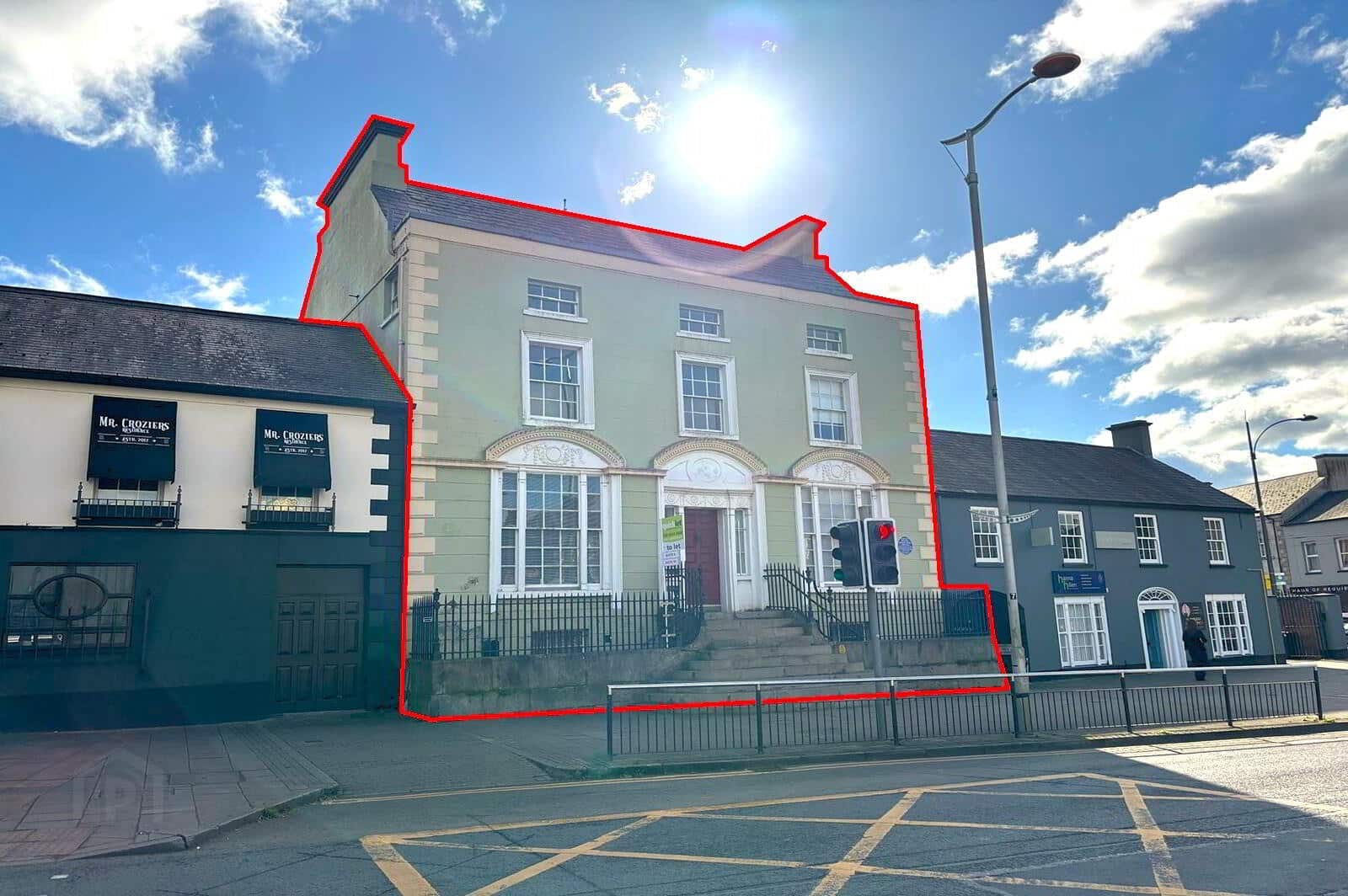
Avonmore House – which is known locally as Crozier House – is an iconic landmark in Banbridge town centre, and was home to Captain Francis Crozier, who disappeared on a hazardous expedition to find the North-West Passage in the 1840s.
Now new plans have emerged for the property, which was advertised for sale in November.
Two separate planning applications – one of them for listed building consent – have been lodged with Armagh City, Banbridge and Craigavon Borough Council for consideration.
They have been brought forward by Mr and Mrs Jonathan and Lynne McCabe, who have plans for a new guesthouse, giving a new lease of life to a building which was built around 1791, a three-storey mid-terrace building on Church Square.
And they are no strangers to such interventions, having previously delivered similar schemes involving the conversion of listed buildings, including the creation of Arthurs of Hillsborough and Ralphs of Moira.
Both, according to a design and access statement, demonstrate a “sensitive and appropriate approach to the adaptation of historic buildings, successfully preserving their character and architectural significance while accommodating a new use”.
In relation to Banbridge, the proposals would see the “retention and conservation” of the existing listed building, and allowing for a change of use from existing office units into a “12 bedroom guesthouse/lodgings”.
The design statement explains what is envisaged and how this would be achieved: “The proposal introduces 12 en-suite guest bedrooms, breakfast dining facilities, kitchen accommodation, storage, staff facilities and an accessible bedroom suite. The scheme has been designed around the existing structure and circulation pattern to minimise alterations to the existing building fabric and layout.
“Required alterations to the existing plan have been made to accommodate wheelchair access on the basement floor along with minor adjustments to the external steps to accommodate the head height below the external vaulted stairs for an accessible stair lift (a ramped approach is not achievable with existing ground levels within the restricted rear yard).
“Room layouts have been designed around existing openings and historic built up doorways that are to be reinstated. Walls that are indicated to be removed are understood to be recent modern stud partitions created to subdivide for office accommodation.
“Existing internal doors within the entrance lobby, at first floor level are not fire rated and would require extensive work be considered fire resistant doors. Given that daylight can be seen through the middle of the doors, we propose to reuse these as non-fire rated doors within the building and add new fire doors built to replicate the existing doors using matching profiles and details.
“Exiting single glazed windows are to remain with secondary glazing installed internally for thermal and acoustic purposes. Timber windows are to be refurbished with like for like splice repairs carried out where required to remove defective rotten timber.
“The building has had a gas heating system installed with modern radiators. These are to be replaced with heritage style column radiators that are more sympathetic to the style of property. All modern electrical work are to be replaced with new lighting layouts. All mechanical extraction outlets from the en suites and kitchen will terminate through side elevations to preserve the front and rear elevations.
“The roof will be inspected and repaired with like for like materials and techniques where required.
“There are no significant signs of water ingress, however, the parapets are assumed to require cleaning and detailed inspection carried out. Rainwater goods are to be replaced with heritage style conservation approved alternatives.”
According to the statement, the conservation-led approach will preserve the special architectural and historic interest by “employing minimal and reversible interventions”.
It adds: “The significance of the building derives from its Georgian architecture, decorative stucco detailing, original sash window arrangement, entrance composition, railings and historic association with Captain Crozier. The building forms an important component of the historic townscape and is a prominent elevation on Church Square.
“The proposed use of the building will preserved and maintain the structure for generations to come.”
Existing parking to the rear of the building will be designated for disabled and staff parking. And due to height restrictions into the rear yard, deliveries will be made from street parking and loading bays during specific hours.
Additional parking for guests – predominantly evening through to morning – will be off-street parking at 33 Church Square, where “parking is free 24/7” in a car park boasting 138 spaces.
In terms of public benefit, the statement concludes: “The scheme will secure the future of a prominent heritage asset, increase visitor accommodation in Banbridge, support tourism and contribute to town centre vitality.”
Both applications will now be advertised shortly.