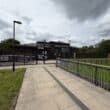
Ulster Architectural Heritage has welcomed the £50,000 fine imposed following the unauthorised demolition an historic building in Banbridge – but stressed more needs to be done to prevent such losses in the first place.
Brookfield House, a Grade B2 listed Georgian residence dating from around 1760, was built for the Smyth family, prominent figures in Banbridge’s linen industry.
Together with its associated buildings and gate lodges, it formed an important part of the town’s architectural heritage. The gate lodges were B2 listed buildings in their own right.
Last week, a property development company was fined £50,000 for demolishing substantial parts of Brookfield House.
Enniskillen-based company, B.I.G. Contracts Ltd, appeared before Armagh Departmental Court, sitting in Newry, pleading guilty to a single charge of executing works for the demolition of a listed building, namely Brookfield House, on the Scarva Road.
Appearing in court on behalf of the company were two of its directors, brothers Gary and Brendan Jones.
The court heard that on August 9, 2024, ABC Council’s planning enforcement department received a complaint that a number of the buildings had been demolished.
Upon inspection, they found a significant portion of the main building and all associated outbuildings had been demolished with only the facade at the front of the main building remaining.
Temporary security fencing had been erected around the remaining part of the main building and large boulders had been placed the entire length of the avenue to prevent vehicular access.
Land registry checks were carried out which found the site’s ownership was split between two companies. However, B.I.G. Contracts Ltd subsequently took full responsibility for the works.
The company had entered into contracts to sell the property back in October 2020, however, the deal fell through in 2024.
After the sale fell through, the directors of B.I.G. Contracts Ltd attended the site and found the buildings were derelict and there were children playing on site.
Concerned about the safety of the site, they carried out a photographic condition report and site health and safety risk assessment on August 6, 2024.
The directors reported that they had to “act without delay” and ringfenced the main house and began with the demolition of the extension buildings and gate lodges on August 8, 2024 due to the perceived risk of death or serious injury.
The court heard that the company made no attempt to engage with council in respect of their plans or to assess other suitable options.
The prosecution said the buildings were “basically entirely destroyed” and could not be reinstated.
Following last week’s court judgement, Ulster Architectural Heritage has welcomed the penalty imposed.
The gate lodges had been on the Heritage at Risk register.
When the gate lodges – along with parts of the residence’s outbuildings were demolished in 2024 – UAH publicly condemned the demolition, calling for action to protect Northern Ireland’s historic environment.
A spokesperson for UAH, reacting on Monday, said: “The subsequent prosecution and substantial fine are welcome, demonstrating that breaches of listed building legislation can carry serious financial consequences. However, financial penalties cannot recover historic buildings once they have been destroyed.
“The Planning Act (Northern Ireland) 2011 provides both local councils and the Department for Communities, through its Historic Environment Division (HED), with statutory powers to protect listed buildings. These include listed building enforcement notices, urgent works to secure their preservation and, in certain circumstances, repairs notices, and compulsory acquisition.
“UAH believes these powers must be exercised proactively and decisively, rather than relying on prosecution after irreversible damage has occurred. Both HED and local authorities have important responsibilities in identifying buildings at risk and intervening before their loss becomes inevitable.
“While public safety must always be paramount, demolition of a listed building should remain a last resort, considered only after reasonable alternatives for stabilisation, repair and conservation have been properly explored.”
UAH said it hoped the prosecution would “serve as a deterrent to unauthorised demolition”, while “prompting greater emphasis on early intervention and effective enforcement across Northern Ireland”.
“Ultimately, the success of heritage protection should be measured not by the number of prosecutions secured, but by the historic buildings saved,” it added.