The Southern Trust is drawing up plans to cut £42.4m next year, but insists it has gone as far as it safely can without putting frontline services, staffing levels or patient access at risk.
Executive Director of Finance, Procurement & Estates at the Southern Health & Social Care (HSC) Trust, Catherine Marks has unveiled the ambitious efficiency plans which will hopefully enable the health body to save 3.6 per cent of its annual budget.
And while that figure falls short of the 4 per cent savings target identified for 2026-27, the senior Southern Trust representative explained at a board meeting held on Thursday, August 27, that the Trust is anxious not to jeopardise service provision, staffing levels or patient access.
She told Southern HSC Trust board members: “While formal budgets for 2026-27 have not yet been issued, we have been planning on the basis of indicative assumptions provided by SPPG (Strategic Planning and Performance Group), which require the Trust to deliver savings equivalent to 4 per cent of the annual budget allocation.
“For the Southern Trust, this represents a very significant financial challenge.
“The total savings requirement for 2026-27 is £47.5 million, equivalent to approximately 4.6 per cent of our budget.
“This comprises a 4 per cent savings requirement of £41.7 million and an underlying deficit brought forward from last year of £5.8 million.
“Last year, the Trust successfully delivered savings of approximately £43 million, representing around 4 per cent of our budget.
“£5.8 million of those savings were non-recurrent in nature and therefore created a deficit into this year.
“At the same time, we continue to experience increasing demand for services, workforce pressures and ongoing inflationary costs across the Trust.
“The scale of the challenge facing health and social care is therefore considerable. Achieving financial balance while maintaining safe and effective services is becoming increasingly difficult.
“The Trust has developed its savings programme in two phases. Phase 1 savings, previously approved by the Board, amounted to £29.9 million.
“These measures focus primarily on low-risk opportunities, including workforce efficiencies, reductions in agency and locum expenditure, expenditure controls and income initiatives.
“Of the £29.9 million identified in Phase 1, £24.1 million contributed directly towards the 4 per cent savings requirement, while the remainder addressed the opening deficit position.
“The implementation of Phase 1 measures is already underway across all directorates.
“Following delivery of Phase 1, a gap of £17.6 million remained against the requirement to achieve the full 4 per cent target.
“Following correspondence from SPPG in June, the Trust was requested to develop a balanced financial plan capable of delivering the full savings requirement of 4 per cent.
“Within the original Phase 2 submission, SPPG approved savings totalling £6.9 million.
“Since then, the Trust has undertaken further work and identified an additional £5.6 million of savings opportunities.
“This means that, in total, the Trust has now identified £42.4 million of savings, representing approximately 3.6 per cent.
“While this is a substantial achievement, it leaves a remaining gap of £5.1 million. This is equivalent to approximately 0.4 per cent of the budget.
“The Trust continues to work closely with SPPG to identify further regional and local opportunities to address this remaining shortfall.”

Executive Director of Finance, Procurement & Estates at the Southern Health & Social Care (HSC) Trust, Catherine Marks. Photo: Southern HSC Trust
The Executive Director of Finance, Procurement & Estates stressed that no further budget cuts are currently being envisaged, as this would jeopardise critical service delivery: “The Trust’s assessment is that £42.4 million now represents the maximum credible and deliverable level of savings within this financial year.
“While there remains a risk regarding delivery of some savings within the financial plan, this will continue to be closely monitored.
“In developing these proposals, we have sought, where possible, to minimise the impact on frontline services, patient care and workforce quality.
“Measures included in the plan have been put forward because they are considered to represent the lowest-risk options available in terms of protecting patient safety, maintaining quality of service and supporting workforce sustainability, while remaining deliverable within the financial year.
“However, many of the savings identified are non-recurrent in nature and therefore do not fully address the underlying longer-term financial challenge faced by the Trust.
“Savings beyond this point are increasingly likely to result in direct impacts on service provision, staffing levels or patient access.
“For that reason, we believe the plan presented today represents the most balanced, realistic and deliverable approach at this stage.
“The largest areas of savings identified within the plan include temporary staffing reductions of £7.8 million.
“These savings will be achieved through reducing reliance on nursing agency and medical locum staff by converting posts to substantive appointments where possible.
“A further £7.4 million relates to workforce and vacancy control measures.
“Facilities management contributes savings of £4.5 million.
“These measures include reducing non-urgent maintenance expenditure while protecting high-risk statutory maintenance requirements, alongside a range of functional support efficiencies, service redesign initiatives, procurement savings and revised charging arrangements for services such as car parking, catering and accommodation.
“The plan also includes corporate savings and financial adjustments of £8.1 million.
“Finally, £4.2 million is expected from a range of operational efficiencies across directorates.
“Together, these five areas account for approximately £32 million of the £42.4 million, and represent the most significant contributors to achieving the overall plan.
“There are additional savings arising from medicines optimisation, diagnostic reform initiatives, older people’s services efficiencies, children’s services, high-cost care arrangements, income generation and digital and AI-enabled efficiencies associated with Encompass.
“To provide additional assurance and external challenge, the Trust has engaged PA Consulting independently to review and stress-test our financial plan.
“This work draws upon experience they have across NHS and other HSC organisations. It is specifically focused on identifying additional opportunities to close the remaining gap.
“This has been an exceptionally challenging process. The scale of the financial challenge facing Health and Social Care continues to grow, while demands for services and operational pressures remain significant.
“The proposals before the Board today represent many months of work across the Trust, and reflect a substantial engagement to identify savings.
“While a gap of £5.1 million remains, management believes that the £42.4 million identified represents the most credible and deliverable plan at the moment.”
While acknowledging that reducing the budget of the Southern Health & Social Care (HSC) Trust by 4 per cent annually would be a major challenge, Chair of the board of the statutory health body, Eileen Mullan has expressed strong support for the plans.
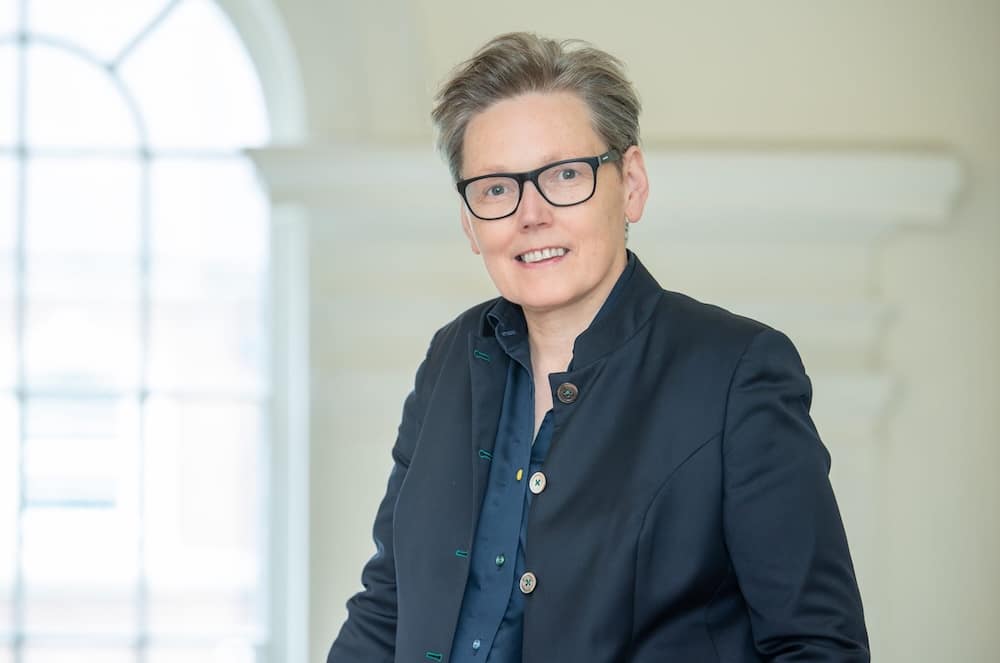
Non-Executive Chair of the Southern HSC Trust, Eileen Mullan. Photo: Southern HSC Trust
Speaking at the August 27 board meeting of the Southern HSC Trust, which had as its sole agenda item the Trust Financial Plan 2026/27, the chair of the Trust board told all gathered: “There’s just a few things I want to say promptly by way of context as Trust Board Chair.
“[We] received a letter from the Permanent Secretary of the Department of Health on July 23. This letter set out very clear expectations of all Health and Social Care Trusts and organisations in the current financial year, which is year one of three of reform and financial recovery.
“It details the financial pressures for the Department of Health, which is approximately £800 million.
“There’s acknowledgement there of the good work that was done last year in relation to the £300 million of savings that were achieved.
“The Permanent Secretary is very clear, there are significant challenges in delivering three years of 4 per cent of cash-raising releasing efficiencies, and this is all in line with the reset plan which we as a Trust fully support.
“We do as a Trust have statutory duties to break even and that means we need to live within our means, but we also need to deliver safe care.
“All Health and Social Care Trust Boards are meeting today about their plans, and I want to acknowledge the work of our senior team, along with colleagues across Health and Social Care to get the plan to where it is today.
“I know that any discussion about savings can cause concern, and it is important that we understand and help others to understand the plan along with the risks, the mitigations and indeed the impacts. And that’s what I hope we get from you all today.”
Most read today
PUBLIC NOTICE