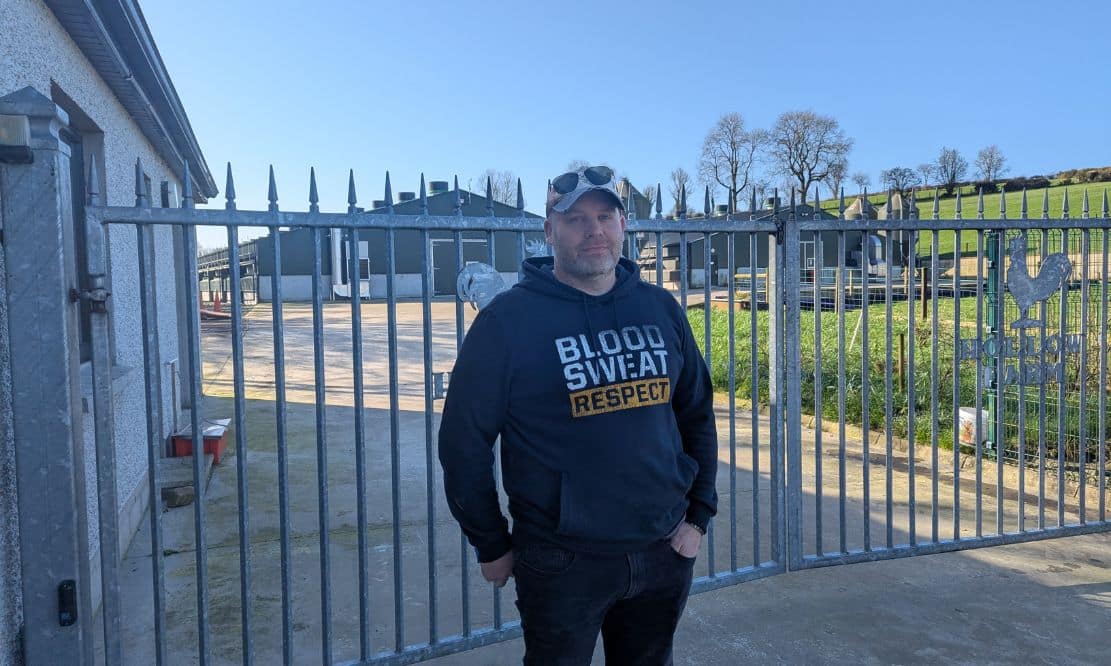
A Benburb farmer who inherited the family farm in 2009 is championing innovation and technology as he continues to find new ways to ensure his agricultural enterprise’s longevity.
Jonny Allen took over what was then just a small cattle farm from his father, Edwin following his regrettable passing in 2009.
The farm had been built on suckler cows and cold, hard sweat. As many in the farming community will know, it takes constant manpower.
But with all the work that went into it thanks to Edwin’s steady, unwavering dedication… the business was running at a hefty loss by the time Jonny took up the reins, aged 26.
Speaking to Armagh I, Jonny explained: “Long story short, I think the overdraft was sitting at minus £25,000 and it was never, ever where we were breaking even. That minus £25,000 was ground zero.
“I was lucky my mum was a school teacher and then dad, with his side of things, did his best. It was what it was and dad artificially inseminated cows and that was his income.”
Losing Edwin – who had been sick with cancer for a number of years – was beyond difficult for the entire family. But for Jonny, in particular, he could see his father’s shadow at every turn in the yard.
“At that time, it was just a numbers game and it was brutal. When it was good it was good, but when it was bad… When there was bad weather or we were short on silage…” he paused. “When you think about it now, it’s hard. But I took so much help.
“It’s lonely. You’re out at night time calving a cow, maybe lost a cow and something not right… it gets in on you.
“Dad was sick for a few years with cancer. It was very close but very hard.
“He was a dreamer, he used to say: ‘Work hard and you’ll get that’. Some real, real great life lessons.”
And Jonny did work hard. But he worked his mind just as much as his muscle.
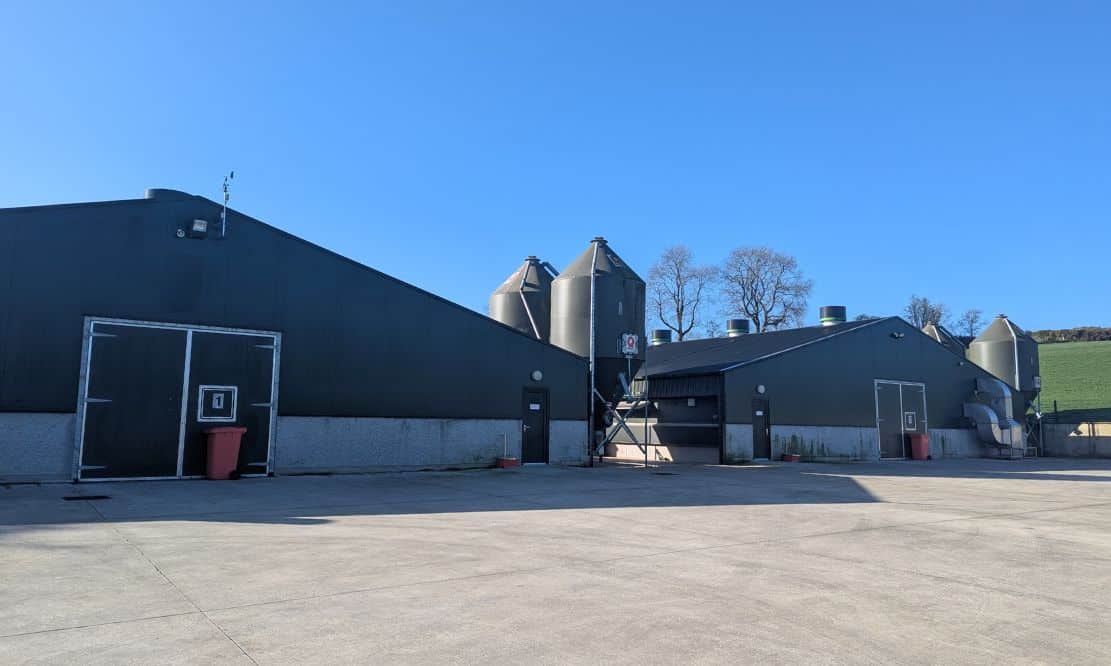
In 2017, Jonny researched bringing in chickens. It was a new venture and something he knew only a little about. But it was going to be costly… that much he knew.
He had studied at Greenmount College and then Harper Adams. Through his studies he not only acquired knowledge but he also met some “great people” and their know-how became invaluable in the days and weeks that lay ahead.
“I always had that inkling to diversify,” he said. “It was equal amounts of petrifying and exciting. Some of the quotes for money in jobs was colossal compared to what I was dealing with.
“I’m maybe fifth generation here and you carry that. You don’t want to be the one who drops the ball. That’s why the chickens came in because I could see it becoming a hobby farm.”
Research led him to Moy Park which was running a House Payment scheme to help bring in new growers.
“They would support you but it was also with a contract so they guaranteed you for 10 years,” said Jonny. “They more or less guaranteed you so many crops a year and a price within reason.
“It took a bit of the uncertainty out of it. There was still risk in it but you had something to work to; you knew if you did this and that, in terms of what you could control, you would be OK.”
During this phasing into poultry, Jonny kept his cows which he regarded as the “revenue stream” to get the chicken houses going.
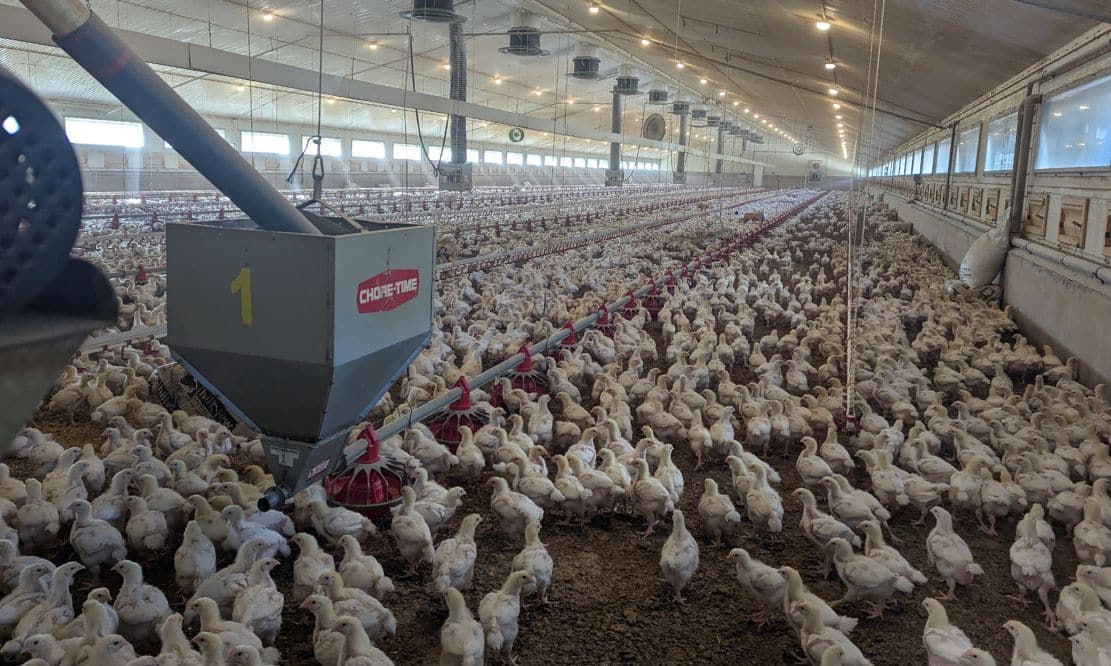
Today, almost nine years on, he houses approximately 56,000 chickens in two houses and still holds around 150 head of stock from calves to grown cows.
Showing his sentimental side, he said: “My oldest cow is maybe 18-years-old. She was one of my dad’s.
“People say, ‘You should get rid of that cow’ but I get attached to them.”
He feels the same way about his chickens.
And caring about his animal welfare led him to start making innovations at the houses.
“I missed out on the biomass scheme and was using gas,” he continued. “I went down one night [to the houses] and it was frosty and steam was flying out the top. A friend in Moy Park said he would like to try out a new heat exchanger in the house.
“We modified it and did a few things to it and it worked fantastically well. The first one was Dutch and the guy came over and showed us how to use it, but we knew it could be improved so we made changes with the fans, settings and the catchment area for the waste and now the Dutch guys have adapted their equipment and they’re selling all over the world.”
Jonny even made a catchment attachment which “vents all the air up into the atmosphere”. He says there are trials going on and while the data is not yet published, he believes there is a “noticeable reduction in ammonia”.
“I always say to people it’s good for the bird, it’s good for me, it’s good for the environment and it’s good for the pocket. It’s a no brainer!”
Five years ago, he then made another move into solar panels with the view of becoming carbon neutral. It has worked so well, that Jonny says by next month, they will be.
“I’ve been really lucky to find such good people to work with,” said Jonny. “The solar panel company went over and above. The option is there to export electric. We have roofs on the houses there that are doing nothing except sheltering animals so we may as well use them as an energy source too.
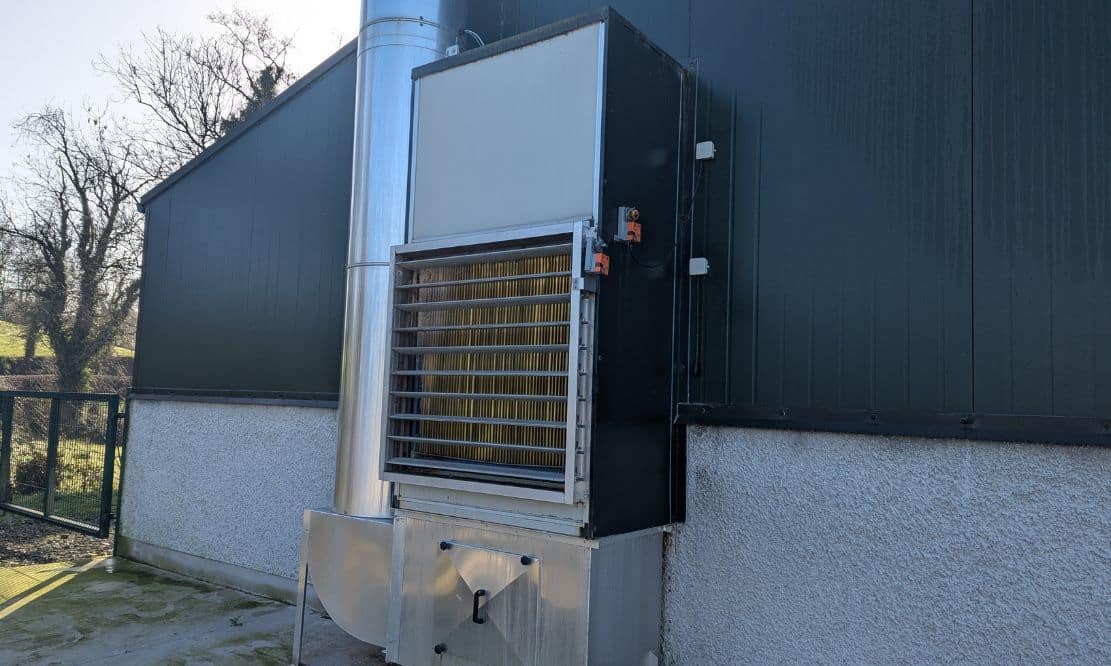
“One big thing doesn’t solve it but if everyone does a wee bit. Heat exchangers are reducing our gas bill by about 40% and a very conservative 20% reduction in ammonia. It’s for nothing, if you understand me, it’s a simple concept.”
It’s been a long slog over the last 17 years since Edwin’s death but the young farmer has undoubtedly done him proud.
Jonny is proud to say the farm is now much more financially stable, he enjoys his work and the livestock are happy!
He said: “I do enjoy it” and, again quoting his late father, “Dad always said if anything is worth doing, do it right.”
Jonny also had a few sage words of advice for other young farmers standing to inherit land or for those perhaps feeling stuck in a rut: “Do your research and do something you’re passionate about. If you’re passionate about it, it comes easier.
“And anything that saves red diesel and time is money well spent. That’s one thing I’ve learned.
“If you can buy as good a quality as you can possibly afford…. and that doesn’t mean throw up a chicken house and buy yourself a fancy motor! You’re going to have to drive a beat-up car for a few years but if you’ve got a chicken house that’s a Rolls Royce then it’ll make money when you’re sleeping and that’s a big, big help.”
The poultry and cattle farmer has also been officially recognised for his endeavour, securing multiple awards with Moy Park, including ‘Innovator of the Year’, and was crowned runner-up as ‘Poultry Farmer of the Year’ with Waitrose, competing against much larger farms from across the UK.
His practices combine traditional farming values with cutting-edge technologies – all with the view of future-proofing agricultural practices for generations to come.