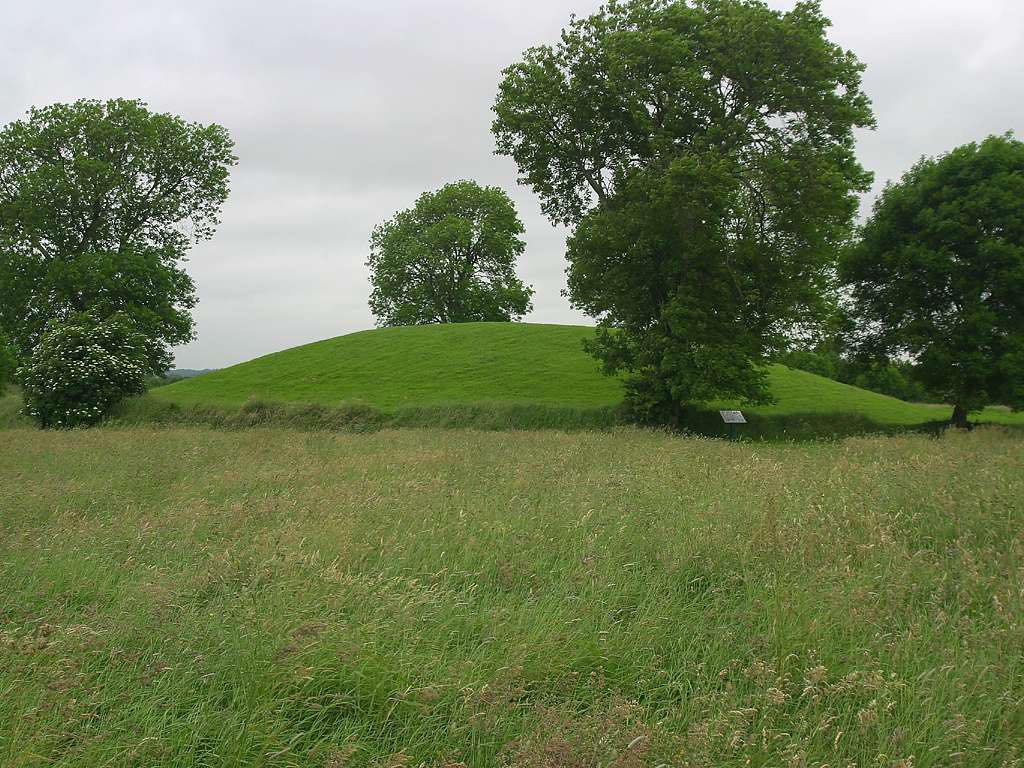
The outcome of a bid to win UNESCO World Heritage status for Armagh’s ancient Navan Fort is expected to be known in July 2031 – with ABC Council also pressing ahead to secure funding for the redevelopment of the popular tourist attraction on site.
Details emerged during the course of a presentation to council’s economic development committee sitting in October, when councillors were informed that the inclusion of Navan Fort was a “necessary” part of the Royal Sites of Ireland’s ambitions.
The council also pledged to allocate up to £30,000 as efforts progress.
Caitriona O’Connor, who works with Tipperary County Council, is the coordinator for the Royal Sites of Ireland Nomination Project and detailed the current state of play.
The five components in the Republic – Rathcroghan, in Co Roscommon, the Hill of Tara, in Co Meath, Dún Ailinne, in Co Kildare, Uisneach in Co Westmeath, and The Rock of Cashel, in Co Tipperary – were included on Ireland’s UNESCO World Heritage Tentative List in 2022.
It is expected that Navan Fort in Armagh will be added to the UK’s World Heritage Tentative List next year.
Said Ms O’Connor: “Including sites on the tentative list is the first step towards seeking World Heritage status and, once that’s completed, we’ll be moving to the next stage.
“The Royal Sites are considered to be universally unique through their well preserved cultural continuity, large scale prehistoric, Iron Age and early mediaeval complexes. They are a group of sites that represent kingship and the establishment of power in the Iron Age and early mediaeval period.
“We seek UNESCO status because it brings global recognition and protection for heritage values, but it can also bring various long term socioeconomic benefits for communities.”
Ms O’Connor told the meeting that the Royal Sites were first proposed for UNESCO World Heritage status in 2010 and there has been a “series of activities over the intervening years”.
The hope now is to submit the nomination in 2030.
Ms O’Connor said, among other things going forward, they would be “completing a comparative analysis study”, the aim of which was “to justify the inclusion of Navan Fort in the group”.
But she assured: “We’ve just submitted this to National Monument Service and it will be reviewed by DfC but, effectively, the conclusion of that report is that Navan Fort is necessary for the nomination to succeed. It’s a very significant site within the group.”
At the end of this year, a ‘draft preliminary assessment’ request will be submitted to the UK Government.
Ms O’Connor, detailing work carried out, added: “We’ve had a preliminary meeting with the planning authority to discuss potential boundaries for the property. We’ve appointed a community engagement officer; community engagement is considered essential to successful World Heritage nomination and we’ll need to demonstrate this to UNESCO.
“We’ll be doing an audit of the survey data, looking at conservation management plans, and then submitting this draft preliminary assessment, first to UK Government for review, and then ultimately to UNESCO.”
The co-ordinator explained that she would advise any stakeholders that seeking UNESCO World Heritage status “is not a silver bullet”.
But she added: “It’s an excellent thing to pursue, but ultimately, what we’re saying is that these sites are already of international significance. They should already be protected to the highest level of protection available, and that the UNESCO designation is a layer of recognition on top of that, which is an enabling condition, but it’s not a guarantee of success for conservation or economic benefits.
“In order to get those benefits, there needs to be strong governance in place, funded visitor site management, benefit capture mechanisms, and adaptive monitoring systems, and in the nomination dossier we need to be able to demonstrate this to UNESCO.
“So what we can support is with policy recommendations to achieve these during the process. The next couple of years is really important to gain support and have conservation mechanisms in place, and the quality of the process, we hope, will be reflected in a successful nomination.”
SDLP Councillor Thomas O’Hanlon said it was “telling” that the speaker had said Navan’s inclusion was necessary for the bid to succeed.
And he added: “I’m glad to see the ambition is there to get us onto the tentative list in 2027 and then hopefully then on to make a formal bid.”
Councillor O’Hanlon also sought an update from council officers on the development of a masterplan for the Navan site, “recognising and complimenting” this bid for World Heritage status, and asked Ms O’Connor if she had any link with the ambitions of Armagh Observatory and Planetarium – “that other jewel in the crown” – for similar UNESCO recognition.
The Royal Sites co-ordinator confirmed they had been “working closely” with Professor Michael Burton at AOP, where they would have to work through “all the same stages”.
She said they were trying to keep conversations with ABC Council “as joined up as possible”, and “ensuring that whatever we’re doing is a collaborative process”.
“It’s a good opportunity, I think, to have two tentative listed sites. There’s a lot to be learned through the process, so I think this is a benefit,” added Ms O’Connor.
In terms of a masterplan, meanwhile, Tourism Manager Sara McGeary said there had been a development proposal put forward for the Navan Centre under the ‘Levelling Up’ fund for a £4.5 million project in 2022, although that had been “unsucccessful”.
But she added: “Nevertheless, there’s a basis of a concept feasibility sitting there and we are currently working with our colleagues in estates and colleagues in our procurement team to look at potential sources of funding for the development of a masterplan, and also the processes around how we move a potential project forward.
“We have had positive feedback from potential funders who would welcome a bid for capital development funding for a masterplan at the Navan Centre so that’s very much live at the moment.”
Alliance Councillor Peter Lavery said the presentation had demonstrated the “deep rich cultural heritage we have in our borough and how this bid for the six sites weaves all of that together”, highlighting the importance of “working together to come to a successful conclusion”.
In a follow-on to the presentation, council also agreed – on the proposal of Councillor O’Hanlon and seconded by Councillor Lavery – to allocate £30,000 from within existing budgets towards the delivery of a “pilot creative practice engagement project” at Navan Fort in support of the Royal Sites of Ireland UNESCO nomination process.